

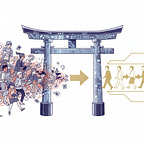
The gap between intern expectation and professional reality is a global phenomenon. Japan, however, exposes this gap faster and with higher fidelity than nearly any other market because interns are immediately integrated into the same tight, high-stakes structure as full-time employees, not a simplified, insulated training environment.
The core tension is this: Foreign interns arrive expecting development and opportunity, while the Japanese organization evaluates discipline and consistency. The mismatch between these two expectations shapes almost every internship experience.
The Global Expectation of Immediate Contribution
Most foreign interns operate under the assumption that the internship functions uniformly across borders: tasks are assigned early, instructions are clear, responsibility is visible, and the potential for a job offer is immediate. While backgrounds vary widely from the practical, efficiency-seeking Swiss intern to the energetic, autonomy-expecting Spanish or French intern, or the highly ambitious Western-born Asian intern—the shared baseline is a demand for meaningful, immediate involvement.
This is particularly true for Gen Z cohorts, who often arrive with a high expectation of rapid impact but a low tolerance for slow progression. Their motivation can drop quickly when the initial reality does not match their vision of fast-paced contribution. Meanwhile, their millennial counterparts tend to exhibit more stable expectations, capable of managing ambiguity for longer periods without direct supervision. Despite these differences, almost all assume the work itself will validate their presence.
Japan does not operate this way.

The Reality: The Integrity of the Workflow
Japan’s work environment is defined by its tight integration and high degree of interdependence. The system is built on the principle that one person’s misstep does not just affect their score, but compromises the entire team, leading to a breakdown of wa (harmony) and shin’yō (trust).
Because of this necessary rigor, Japan assigns responsibility only after readiness is evident. The organization first evaluates a range of non-task-specific behaviors before granting significant autonomy:
Discipline and Consistency: Are instructions followed precisely and repeatably?
Situational Awareness: Can the intern perceive workflow constraints and anticipate needs?
Sequence Respect: Is acting correctly prioritized over acting quickly?
Contextual Reliability: Can they operate under limited supervision without introducing noise?
Foreign interns frequently misinterpret this pre-screening phase as underuse or a lack of trust. In reality, it is Japan protecting the integrity of the organizational workflow. Interns sit inside the same structural standards as full-time employees. Expectations are not softened; only the scope of responsibility is carefully controlled until readiness is proven.
The Unmasking of the Global Work Gap
Across all backgrounds—East Asian, European, North American—a clear pattern emerges that is a global phenomenon, yet starkly visible in Tokyo: the vast majority of young interns operate on a 90% Reactive, 10% Proactive pattern.
The 90% Reactive group, typically early 20s with limited prior work exposure, rely heavily on step-by-step instructions, require repeated reminders for procedural tasks, and demand ongoing supervision. They are capable, but not yet reliable. The 10% Proactive group, usually older or with prior structured experience, prepare before asking questions, anticipate needs, and operate with minimal oversight.
This global gap between ambition and operational readiness is immediately exposed in Japan because the highly systemic workflow cannot absorb unprepared behavior. The consequences of a mistake carry a high collective cost, forcing the system to raise the threshold for granting responsibility far higher than in more forgiving, siloed Western workplaces.
Why Japan Makes the Gap Visible
Japan’s system is not inherently harsher; it is simply more systemic and integrated. Several factors combine to magnify this gap:
Workflows are deeply interdependent, making it impossible for an intern’s actions to be isolated from the rest of the team. Sequence takes absolute priority over speed, meaning acting early is less important than acting correctly. Furthermore, communication is highly contextual; interns expecting direct, explicit clarity struggle to navigate the implicit expectations that govern high-trust Japanese business relationships. Finally, structural expectations are not lowered for interns; they must match the system, not the other way around.
The result is a workplace where readiness is non-negotiable, and the system acts as an instantaneous mirror, reflecting the exact state of an individual’s professional discipline.
Insight for Global Leaders
The experience of the foreign intern in Tokyo provides a precise, personal-level mirror of the challenges global brands face when they enter the market at a strategic scale:
In both cases, intent exceeds preparation; speed exceeds alignment; initiative exceeds contextual understanding; enthusiasm exceeds structural awareness; and assumptions exceed operational readiness.
Interns discover this gap through a quiet period of underuse. Corporations discover it through costly market failure and organizational friction. Japan rewards readiness, consistency, and respect for the system’s logic, not simply enthusiasm or ambition. Understanding this is not a cultural nicety; it is structural survival.
The Bottom Line
Foreign interns expect to gain opportunity; Japan expects them to demonstrate readiness. This difference is not cultural, but structural. Japan’s integrated system makes the gap visible immediately, forcing individuals and corporations alike to match their discipline to the required level of systemic reliability.
Over to You
If you were to design a pre-internship readiness program for your global candidates, what is the single most critical structural behavior (e.g., proactive documentation, sequence checking) you would demand they master before they set foot in the Tokyo office?


