


Shiseido is not merely a cosmetics brand. It is a cultural engine. It is a system built on profound discipline, absolute consistency, and the long-term view, the precise elements of Japanese brand-building that outsiders rarely understand and locals often find too fundamental to articulate.
When we examine the heritage of Shiseido, the goal is not to produce a piece of nostalgia. It is to expose the structural spine that carried the company from a 19th-century pharmacy in Ginza to a global identity rooted in aesthetic governance. We must understand the operational logic that creates an unfair advantage in the market.
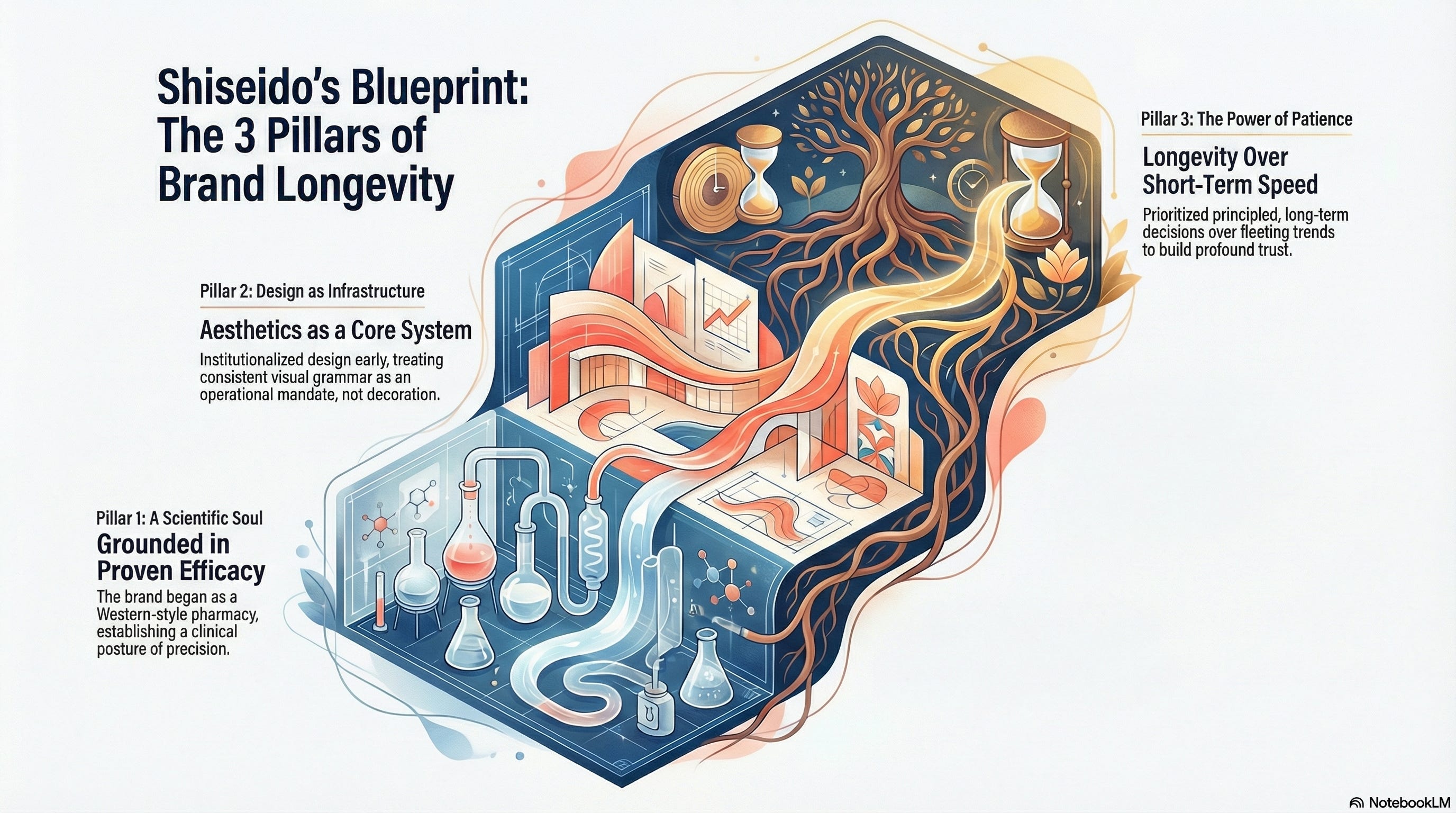
Three unique, structural elements define Shiseido’s rise and enduring influence.
A Scientific Origin That Never Left the Brand
Shiseido began in 1872 not as a traditional cosmetic house, but as Japan’s first Western-style pharmacy. That starting point was definitive: it established an analytical, clinical posture that combined meticulous Japanese craft with the rigor of Western modernity.
This scientific backbone shaped everything from internal product development processes to external visual behavior. The brand still communicates with a precise, clinical restraint, even when the surface product is emotional or aesthetically luxurious. This origin story ensured that the pursuit of beauty was always grounded in proven efficacy, establishing a deep internal discipline of precision without chaos. This structural commitment to science became a powerful, non-negotiable principle of its brand governance.
Aesthetic Leadership as Corporate Structure
Shiseido institutionalized design before most global brands fully grasped what institutional design meant. They understood that aesthetics were not a decorative layer but a core piece of corporate infrastructure.
In the early 20th century, the company built an internal creative department that functioned with extraordinary autonomy and discipline. Their visual grammar, the uniform typography, the intelligent spacing, the strategic use of the defined “Shiseido red” operates like a calm, authoritative grid quietly asserting the brand’s authority. This is not marketing; it is aesthetic governance. By treating consistency as an operational mandate, Shiseido ensured that every piece of communication reinforced the brand’s stability across product cycles and decades.
The Long-Cycle Brand Patience
Shiseido never chased short-term speed or fleeting trends. It followed a strategy of compounding small, principled decisions across decades, prioritizing longevity over immediate visibility.
The result is a brand that has aged without ever becoming old. It has remained modern and relevant not by chasing fads, but by staying fundamentally principled in its execution and visual presentation. This deep-seated patience allowed the brand to build a profound level of shin’yō (trust and credibility) that cannot be bought through aggressive campaigns.
This systemic commitment to operational brand discipline where science validates emotion, design becomes infrastructure, and patience is a core value is precisely why Shiseido is an important case for modern brand leaders. Founders, CMOs, and strategists who see a brand not as a series of campaigns, but as a rigid system, understand that this discipline is the engine that creates an unfair, enduring advantage.
The Bottom Line
Shiseido’s story is a powerful study in long-term discipline. The company’s global influence was not achieved through luck or aggressive marketing, but through the operational rigor of turning a scientific origin and institutionalized aesthetics into a governance system. To understand how to build a brand that survives more than a marketing cycle, you must first understand the structural spine that companies like Shiseido built.
Over to You
If you were to identify one piece of your brand’s communication, visual or verbal that requires “aesthetic governance” to ensure it remains principled and consistent for the next five years, what element would you choose?


