

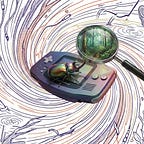
In the late 1970s, Satoshi Tajiri was known to his peers as “Dr. Bug.” While the rest of Tokyo was racing toward a neon-soaked, high-tech future, Tajiri was crawling through the dirt of Machida, obsessed with the tactile thrill of discovering, identifying, and collecting insects. He wasn’t looking for a career; he was looking for a sense of wonder. But as Japan urbanized, the ponds were paved over and the forests became apartment blocks. The “bug hunting” culture, a rite of passage for Japanese children was dying.
Tajiri’s genius was not in creating a video game, but in creating a digital sanctuary for a vanishing physical experience. He didn’t just want to make a product; he wanted to transport the dirt, the discovery, and the social prestige of a rare catch into the palm of a child’s hand. What emerged was a cultural phenomenon that redefined the relationship between humans and their devices, turning a simple link cable into a portal and a niche hobby into the highest-grossing media franchise in human history.
The Tunnel of Exchange
In the early 1990s, the Nintendo Game Boy was aging hardware. It was monochrome, underpowered, and many thought its time had passed. But Tajiri saw something everyone else missed: the Link Cable. To most developers, the cable was a utility for data transfer or head-to-head combat. To Tajiri, it was a physical tunnel.
He imagined creatures literally crawling through that wire from one screen to another. This mental shift changed everything. It transformed the Game Boy from a solitary toy into a social bridge. By splitting the game into two versions, Red and Green (later Blue), Tajiri made “completion” impossible without another human being. You couldn’t just buy your way to the top; you had to negotiate, trade, and socialize.
However, the road to dominance was nearly a catastrophe. Pokémon took six grueling years to develop, nearly bankrupting Tajiri’s studio, Game Freak. When the games finally launched in 1996, they were almost “dead on arrival.” They were technically buggy, the graphics were primitive even for the time, and initial sales were sluggish. Critics dismissed the concept as too complex for children. In any other corporate environment, the project would have been buried. But in the Japanese ecosystem of “patience over quarters,” Nintendo saw a flicker of life in the community’s reaction.
The Transmedia Blitzkrieg
The survival move that turned a failing RPG into a global religion was the “Total Media” strategy. Pokémon didn’t just wait for people to buy the game; it surrounded them. In a synchronized maneuver that would become the industry standard, the anime, the trading card game, and the movies were launched in a tight window.
This created a feedback loop: a child would watch the show, want the card, play the game to see the creature in action, and then go to the theater to see the legend. This wasn’t just marketing; it was the construction of a subculture. Pokémon successfully colonized the “completionist” section of the human brain. The slogan “Gotta Catch ‘Em All” was a directive that bridged the gap between a digital sprite and a physical card.
Consider the real-world impact of the Pokémon Trading Card Game (TCG). By turning the digital creatures into physical assets, Nintendo and Game Freak created a secondary economy. Today, a single “Pikachu Illustrator” card can fetch over $5 million. This isn’t just about a game; it’s about the creation of a stable, alternative currency based on childhood nostalgia and rarity. Pokémon became the first franchise to successfully merge the digital and physical worlds into a singular, cohesive identity.
The Strategy: Engineering Obsession
For the global executive, the lesson of Pokémon is the Strategy of Emotional Architecture.
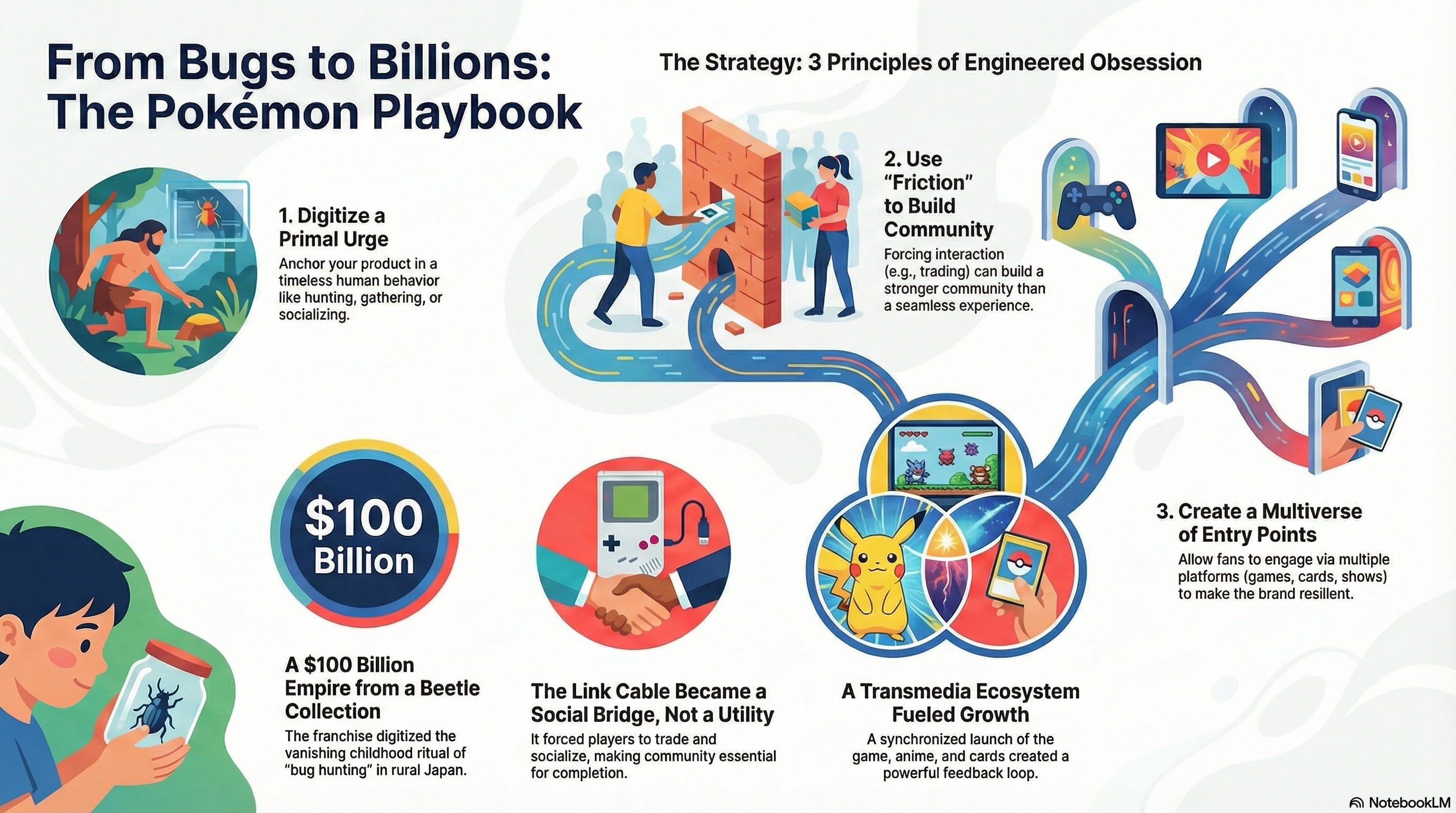
Digitize the Primal: Tajiri didn’t invent a new behavior; he digitized an ancient one (collecting). If you can find a primal human urge, gathering, hunting, socializing and build a digital “home” for it, you create a product that is immune to trends.
The Friction of Community: Most modern tech tries to remove friction. Pokémon added it. By making certain creatures exclusive to certain versions, they forced people to talk to each other. Friction, when used correctly, builds community.
The Multiverse of Entry Points: Pokémon is a “flat” hierarchy. You can be a fan through the competitive video game circuit, the high-stakes card collecting market, or simply by watching the show. By providing multiple entry points, they ensured that the brand could never be killed by a single failure.
The Bottom Line
Pokémon is the ultimate proof that the most powerful technology isn’t 4K graphics or AI; it is the ability to evoke a specific, universal feeling like the thrill of a child catching a beetle in the woods. By anchoring a $100 billion empire in a simple, human memory, Satoshi Tajiri didn’t just build a franchise; he built a global language of play.
Over to You
Are you building a product that people use, or are you building an “ecosystem of discovery” that people feel they must belong to?


