

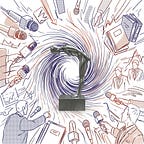
The air in the crisis management suite of the Tokyo headquarters was thick with the smell of cold coffee and ozone. Six hours had passed since the global data breach was confirmed. The American Chief Operating Officer stood by the window, his phone buzzing with frantic alerts from legal counsel in New York. “Whatever you do,” the lead attorney had barked across the Pacific, “do not apologize. An apology is a liability. It’s an admission of negligence. Maintain the ‘no comment’ stance until the forensics are complete.”
Downstairs, in the press gallery, two hundred journalists waited in predatory silence. The Japanese CEO, dressed in a somber charcoal suit, adjusted his tie. He turned to the COO and spoke with a calm that bordered on the eerie. “If we follow your counsel, we will lose the Japanese market by sunset. We are going down there to bow. We are going to bow until the cameras stop flashing.”
To the Western mind, the “apology bow” (Ojigi) feels like a display of weakness, a submissive act that invites litigation. To the Japanese executive, however, the apology is the “Great Reset.” It is a sophisticated ritual designed to absorb the anger of the public and the partner, effectively clearing the social debt so that business can resume. In Japan, the refusal to apologize is seen as a sign of arrogance and a lack of “humanity” (Ningen-sei), which is a far greater threat to corporate survival than a legal settlement.
The Architecture of Atonement
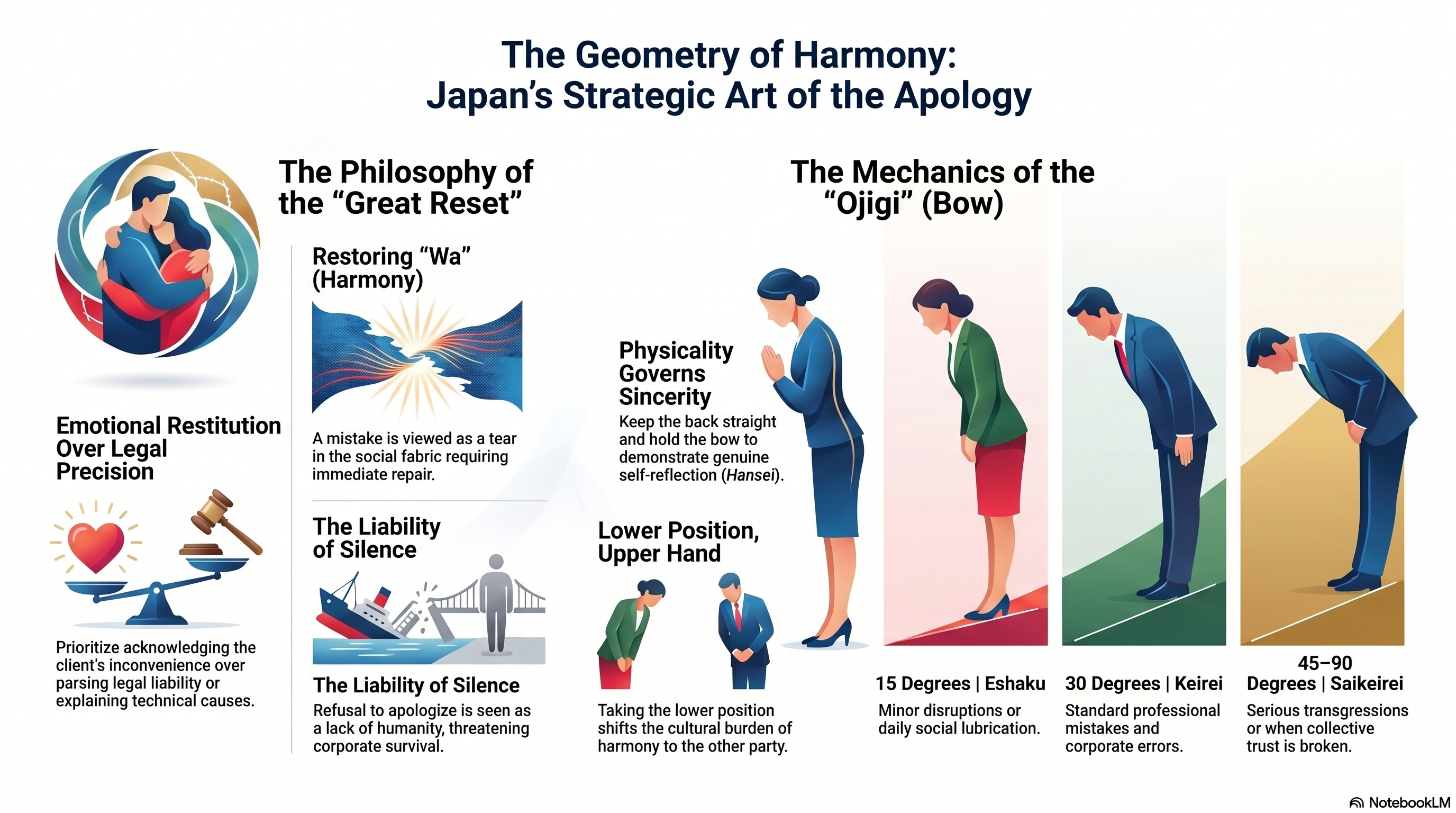
The Japanese apology is a physical language with its own precise geometry. The degree of the incline communicates the severity of the transgression and the status of the relationship. A simple Eshaku (15 degrees) is for a minor disruption. A Keirei (30 degrees) is the standard for professional mistakes. But when the trust of the collective is broken, only the Saikeirei, the 45-to-90-degree deep bow held for several seconds will suffice.
This ritual is rooted in the concept of Hansei (self-reflection). In a culture that prioritizes Wa (harmony), a mistake is viewed as a tear in the social fabric. The apology bow acts as a needle and thread. By physically lowering their head, the most vulnerable part of the body, the executive demonstrates that they value the relationship more than their own ego. They are acknowledging that the “Collective Us” has been inconvenienced by the “Individual Me.”
The most powerful characteristic of the Japanese corporate apology is its focus on “Emotional Restitution” over “Legal Precision.” While a Western apology often tries to parse out exactly who was at fault to limit liability, a Japanese apology takes a “Total Responsibility” approach. The CEO apologizes not necessarily because they personally made a mistake, but because the organization they lead failed the community. This broad acceptance of blame actually shields the company from prolonged public vitriol. Once the bow is performed and the “sincerity” is accepted, the narrative shifts from the mistake to the recovery.
The Liturgy of the Press Conference
To understand the stakes of this performance, one must look at the history of the “Apology Press Conference” (Shazai Kaiken). A definitive example occurred in 2017 during the Kobe Steel data falsification scandal. The company’s leadership stood before a wall of cameras and performed a coordinated, deep bow that lasted for a significant duration. This was not a decorative gesture; it was a strategic necessity. By performing the Saikeirei, the leadership signaled to their vast network of industrial clients including giants like Toyota and Mitsubishi that they were ready to endure the shame required to fix the problem.
Conversely, consider the case of Takata Corporation during the massive airbag recall crisis. The leadership was criticized for being “too slow” and “too vague” in their public apologies, often appearing defensive in the early stages. To the Japanese public, this looked like a failure of Hansei. The lack of an immediate, sincere, and physically profound apology caused a collapse in social trust that was far more damaging than the technical failure itself. The company eventually filed for bankruptcy. The lesson for the global executive is clear: in Japan, the speed and “sincerity” of the apology often dictate the company’s financial fate.
The Strategy of the Graceful Reset
For the foreign executive, mastering the Japanese apology requires a fundamental mindset shift. You must learn to view the apology as a tool for “Conflict De-escalation” rather than a legal surrender. When a mistake occurs whether it is a late shipment, a software bug, or a missed deadline, your first move determines the trajectory of the partnership.
Prioritize Sincerity Over Defense: Your initial response should focus entirely on the inconvenience caused to the client. Use affirmative statements like, “We deeply regret the disruption this has caused your operations.” Avoid explaining why it happened until the emotional debt has been acknowledged. In Japan, the “Reason” often sounds like an “Excuse.”
Execute the Physicality: If you are meeting in person, perform the bow. Ensure your back is straight and your hands are at your sides (for men) or folded in front (for women). Hold the position. The length of the bow is as important as the angle. A hurried bow signals a lack of genuine reflection.
The “Small Apology” Strategy: Use small apologies frequently to maintain the “lubrication” of the relationship. Apologizing for a rainy day, for a slightly late start, or for a long email helps to reinforce your status as a “considerate partner.” This builds a “Trust Reservoir” that you can draw upon when a major crisis eventually occurs.
Separate the Social from the Legal: Work with your local Japanese legal counsel to draft language that satisfies the cultural need for an apology without creating an unnecessary legal loophole. It is entirely possible to say, “We are deeply sorry for the concern this incident has caused,” which addresses the emotional state of the client without admitting to a specific breach of contract.
The ultimate goal of the Japanese apology is to allow both parties to save face. By taking the “Lower Position” during the apology, you actually gain the “Upper Hand” in the negotiation that follows. Once you have apologized correctly, the burden of “Harmony” shifts to the other party. They are now culturally obligated to be gracious and to work toward a resolution. You have used your vulnerability to secure their cooperation.
The Bottom Line
The corporate apology in Japan is a high-stakes ritual that restores the social equilibrium required for business to function. By embracing the geometry of the bow, a global leader demonstrates a sophisticated understanding of Wa and earns the right to continue the partnership. In Tokyo, the most powerful word you can say is often the one that acknowledges your own imperfection.
Over to You
In your next high-pressure meeting, would you be willing to prioritize the “Emotional Reset” of a deep bow over the “Legal Shield” of a defensive silence?


